

Product
-
Weather station
-
Road Weather Station
-
Photovoltaic Inspection
-
Atmospheric monitoring
-
Operating condition monitoring
Recommended article
- Practical Applications of Climate Monitoring Instruments in Agriculture, Forestry, and Field Research
- Application Characteristics of PV Module I-V Power Testers in On-Site Power Plant Inspections
- Application of Compact Meteorological Monitoring Equipment in Dairy Barn Environments
- How Environmental Monitors Achieve Integrated Monitoring of Twelve Parameters
- How Small-Scale Weather Stations Enable Unattended Field Monitoring
- How Meteorological Monitoring Stations for Photovoltaic (PV) Sites Achieve Simultaneous Output of Eight Parameters Without a "Starting Wind Speed" Threshold
Contact us
Shandong Fengtu IOT Technology Co., Ltd
Sales Manager:Ms. Emily Wang
Cel,Whatsapp,Wechat:+86 15898932201
Email:info@fengtutec.com
Add:No. 155 Optoelectronic Industry Accelerator, Gaoxin District, Weifang, Shandong, China
Practical Applications of Climate Monitoring Instruments in Agriculture, Forestry, and Field Research
Article source:Weather station time:2026-11-17 09:34:14 viewed:8times
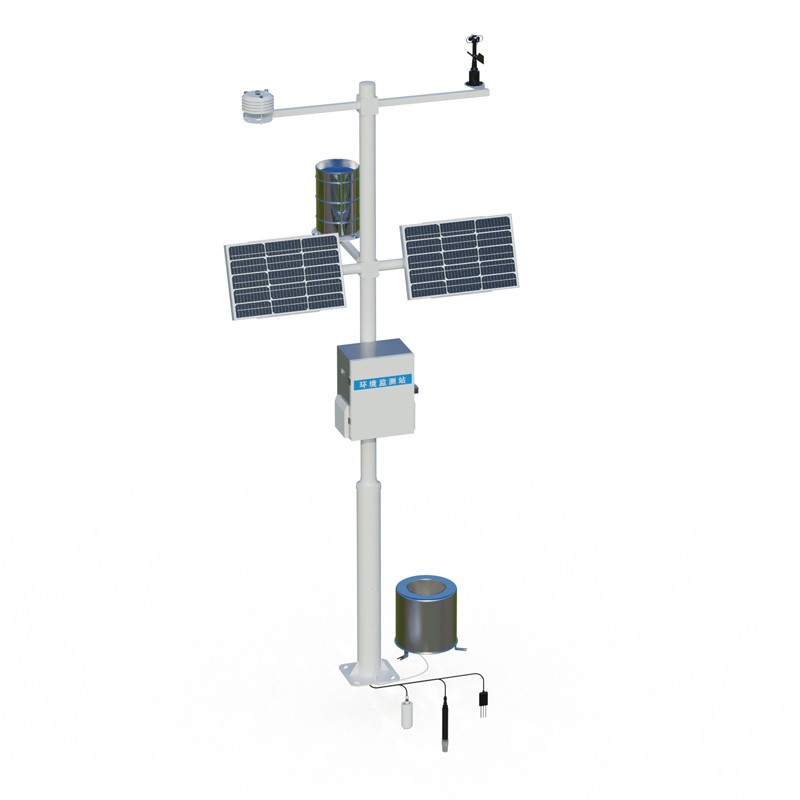
A climate monitoring instrument is a high-precision meteorological observation system that integrates weather sensors, a data logger, a solar power supply, and a mounting mast. It is primarily designed for continuous, in-field monitoring of parameters such as temperature, humidity, wind speed, light intensity, and soil conditions. These devices are engineered for rapid, "plug-and-play" deployment; once installed, they transmit real-time data to a cloud platform for remote access. They are well-suited for applications in agricultural research, forestry ecological monitoring, and emergency meteorological support.
In practice, the value of these instruments lies in their ability to capture precise data on localized, small-scale environments. For instance, climate monitoring units deployed by meteorological authorities in Huangnan Prefecture—specifically within rapeseed cultivation areas—continuously track air temperature and humidity, soil temperature and moisture, and light levels. This provides essential data for assessing environmental conditions during critical stages of crop growth. Unlike the large-scale observations provided by national meteorological stations, this approach focuses on the specific microenvironments of farmlands and forests, helping to identify how localized climatic variations affect crops or vegetation. In forestry, similar equipment is used to collect data on near-ground air temperature, humidity, wind speed, and radiation; the height of the sensors can be adjusted based on vegetation stature, and data sampling intervals can be customized as needed.
Technically, these instruments typically incorporate sensors for measuring air temperature, relative humidity, soil temperature and moisture, and photosynthetically active radiation (PAR). National standards for agricultural and forestry microclimate monitoring equipment specify performance requirements—for example, an air temperature measurement range of -20°C to 50°C with a resolution of 0.1°C, alongside the capability to monitor soil temperature at various depths. The power system, consisting of solar panels and rechargeable batteries, enables the equipment to operate continuously in remote locations lacking access to the electrical grid. Furthermore, the data loggers include power-loss protection to prevent data gaps during unexpected outages. A cloud-based platform aggregates data from various monitoring sites, allowing managers to view real-time readings and historical trends for multiple locations through a single, unified interface. A notable shift in practical application is the lowered threshold for installation. Traditional weather stations typically require professional personnel to handle sensor calibration and complex wiring; in contrast, modern integrated climate monitoring units arrive pre-configured, requiring only that they be mounted on a pole and connected to their sensors to become operational. This versatility has expanded their utility beyond the meteorological and agricultural sectors, making them increasingly valuable for scientific research, field expeditions, and long-term outdoor monitoring. For projects requiring intensive, short-term observation, these units can be rapidly deployed and subsequently relocated to new sites, thereby reducing the costs associated with repeated procurement and installation.
In essence, the primary purpose of these climate monitoring units is to extend meteorological observation capabilities to areas beyond the reach of fixed, permanent weather stations. Rather than aiming for the comprehensive, multi-parameter standards of national-level meteorological networks, they utilize targeted sensor arrays and independent power systems to provide continuous data—such as temperature, humidity, and soil conditions—in environments like farmlands, forests, and experimental research plots. When selecting such equipment, it is more practical to focus on whether the sensor accuracy meets project requirements, whether the power supply duration aligns with the intended deployment period, and whether the cloud platform facilitates convenient data export, rather than simply comparing the sheer number of parameters.
This paper addresses:https://www.fengtuweather.com/technical/1055.html
Related products
Related article
-
Portable IV Curve Tester is used for on-site performance testing of photovoltaic modules
2025-12-12 -
Ultrasonic Weather Station: Precision - Driven Data for Informed Decision - Making
2025-02-21 -
What is a smart river management system?
2024-06-20 -
Road Weather Information System: Tackling the Challenge of Dense Fog Patches
2024-09-30 -
Road Weather Station: Ensuring Safe Transportation with Precise Monitoring
2024-09-14 -
The Crucial Role of Online dust Monitoring system in Controlling Construction Dust Pollution
2024-11-18 -
Forest Weather Station Facilitates Precise Monitoring and Scientific Prevention of Forest Fires
2026-09-28 -
Enhanced Mobility and Safety: The Role of Vehicle-Mount Weather Station
2024-12-25