

Product
-
Weather station
-
Road Weather Station
-
Photovoltaic Inspection
-
Atmospheric monitoring
-
Operating condition monitoring
Recommended article
- Portable I-V Power Tester for Photovoltaic Power Plants: On-Site I-V Characteristic Testing of PV Strings
- Weather Instruments Supports High-Precision Meteorological Data Collection in Field Environments
- Electrical Power Analyzer enables multi-channel power grid parameter acquisition and the detection of harmonics and unbalance
- Shandong Fengtu, a manufacturer of meteorological stations, offers high-precision weather observation equipment designed for field use
- Series power supply for EL-Based Internal Defect Detection in Photovoltaic Modules
- Shandong Fengtu, a manufacturer of meteorological monitoring instruments, produces advanced weather observation equipment
Contact us
Shandong Fengtu IOT Technology Co., Ltd
Sales Manager:Ms. Emily Wang
Cel,Whatsapp,Wechat:+86 15898932201
Email:info@fengtutec.com
Add:No. 155 Optoelectronic Industry Accelerator, Gaoxin District, Weifang, Shandong, China
3-Meter Laser Snow Depth Monitoring Station: Non-Contact, High-Frequency Laser Measurement of Snow Thickness
Article source:Weather station time:2026-03-16 11:13:54 viewed:383times
The 3-meter laser snow depth monitoring station employs high-frequency laser pulse technology to perform non-contact measurements of ground-level snow thickness. Its monitoring range precisely covers 0 to 3 meters, enabling the real-time acquisition of snow depth data and the analysis of snowfall accumulation per unit of time. This device is suitable for snow depth monitoring requirements across a wide variety of environments—including plains, mountainous regions, and scenic areas—facilitating the precise measurement and long-term tracking of changes in snow cover.
The 3-meter laser snow depth monitoring station is an automated monitoring device based on laser ranging technology, primarily designed for the continuous and precise measurement of ground-level snow depth. The device utilizes laser-based snow detection and measurement techniques; by emitting high-frequency laser pulses, it measures the vertical distance from the sensor's mounting point to the snow surface. By combining this measurement with the sensor's own installation height, internal calculations are performed to determine the actual thickness of the snow cover. Through continuous monitoring of distance variations, the device can also analyze the volume of snowfall occurring within a specific timeframe, thereby providing essential data support for weather forecasting, disaster prevention and mitigation, and traffic management.
The monitoring station's measurement range spans from 0 to 3 meters, satisfying snow depth monitoring requirements in most environments, including plains, mountainous areas, and scenic spots. The device employs a non-contact measurement method that remains unaffected by the physical properties of the snow itself, maintaining measurement accuracy even under conditions involving fresh snow, aged snow, or wet snow. The application of high-frequency laser pulses enhances the device's anti-interference capabilities, enabling it to operate stably under complex lighting and weather conditions. Typically achieving millimeter-level accuracy, the device is capable of accurately reflecting even the most subtle changes in snow depth.
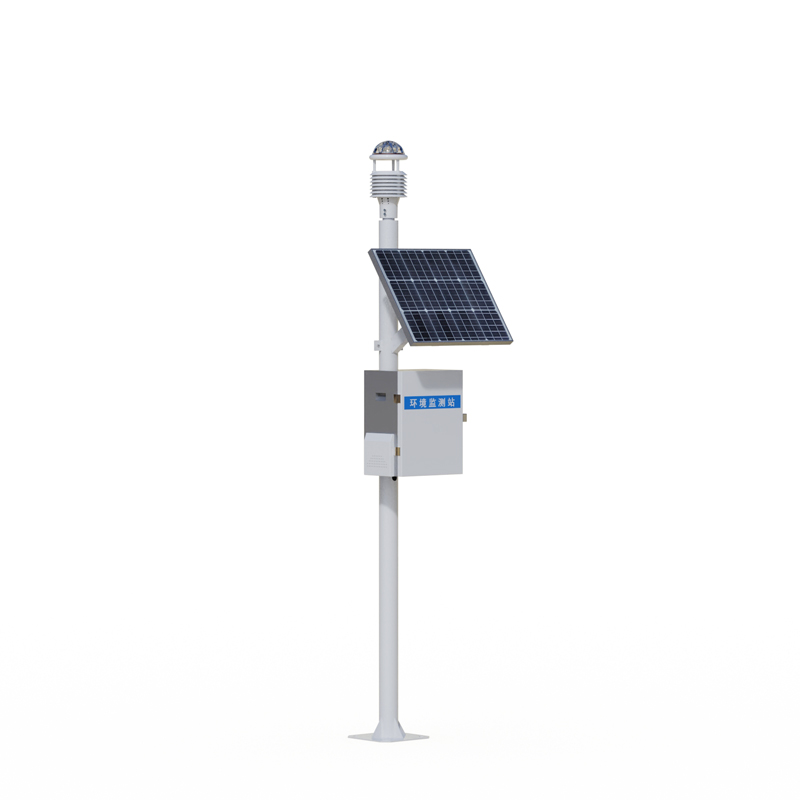
In terms of structural design, the 3-meter laser snow depth monitoring station typically consists of a laser ranging sensor, a data collector, a communication module, and a power supply system. The laser ranging sensor serves as the core component, utilizing industrial-grade optical elements to ensure reliability during long-term operation. The data collector is responsible for processing raw measurement data and storing historical records, while the communication module supports various transmission methods—including 4G, Ethernet, or wired connections—to transmit data to a central monitoring station in real time. The power supply system typically utilizes solar panels paired with backup batteries to ensure the device remains operational around the clock, even in remote field locations without access to a mains power supply. The 3-meter laser snow depth monitoring station finds wide application in fields such as automated snow depth observation at meteorological stations, decision support for highway snow removal operations, real-time snow condition monitoring at ski resorts, and snow-related disaster early warning in mountainous regions. In the meteorological sector, this device replaces traditional manual observation methods, thereby enhancing data acquisition frequency and accuracy while providing continuous data streams for research into snowpack dynamics. In the transportation sector, the monitoring data serves to guide the timing and intensity of snow removal operations, thereby ensuring safe road passage. Within the ski tourism industry, snow depth data provides a critical basis for ski run maintenance and visitor safety.
The installation and maintenance of this monitoring station are relatively straightforward. The device can be mounted on a pole or bracket; the installation height is adjusted according to the required measurement range, ensuring that there are no obstructions directly beneath the sensor. Routine maintenance primarily involves cleaning the optical window and inspecting the power supply system, allowing the device to operate stably over extended periods in unattended environments. The data collected by the device can be displayed, statistically analyzed, and processed via a dedicated platform, thereby enabling remote monitoring and early warning capabilities.

This paper addresses:https://www.fengtuweather.com/technical/894.html
Related products
Related article
-
Odor gas detector Enabling Precision, Round-the-Clock Monitoring of Fugitive Emissions in Industrial Facilities
2026-10-12 -
Power Quality Analyzers Precise Detection of Various Power Quality Issues in the Grid
2026-09-09 -
PV Module IV Curve Tester Measures 400V Module Open-Circuit Voltage and Short-Circuit Current
2026-04-24 -
Negative oxygen ion monitoring system to protect the scenic environment
2024-03-22 -
What is the best Agricultural Weather Stations company?
2024-08-22 -
Meteorological observation station Simultaneously Monitors Six Meteorological Parameters
2026-04-15 -
Grassland weather stations protect against grassland fires
2024-04-30 -
Combatting Dust: The Role of Dust Monitoring Equipment in Protecting Air Quality
2025-01-02