

Product
-
Weather station
-
Road Weather Station
-
Photovoltaic Inspection
-
Atmospheric monitoring
-
Operating condition monitoring
Recommended article
- Electrical Power Analyzer enables multi-channel power grid parameter acquisition and the detection of harmonics and unbalance
- Shandong Fengtu, a manufacturer of meteorological stations, offers high-precision weather observation equipment designed for field use
- Series power supply for EL-Based Internal Defect Detection in Photovoltaic Modules
- Shandong Fengtu, a manufacturer of meteorological monitoring instruments, produces advanced weather observation equipment
- Odor gas detector On-site Monitoring of Odorous Pollutants in Compliance with the GB14554 Standard
- Integrated Four-Parameter Weather Station for Field Meteorological Data Collection (Temperature, Humidity, Wind Speed, and Wind Direction)
Contact us
Shandong Fengtu IOT Technology Co., Ltd
Sales Manager:Ms. Emily Wang
Cel,Whatsapp,Wechat:+86 15898932201
Email:info@fengtutec.com
Add:No. 155 Optoelectronic Industry Accelerator, Gaoxin District, Weifang, Shandong, China
From Risk Mitigation to Cost Reduction: The Role of Photovoltaic Weather Stations in Solar Energy Management
Article source:Weather station time:2025-07-21 09:21:22 viewed:529times
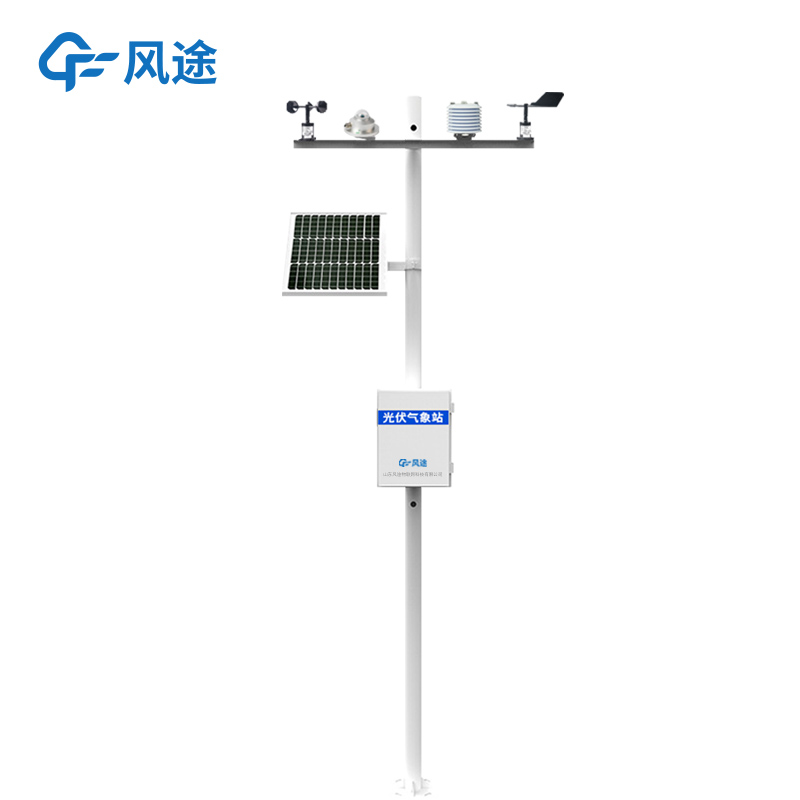
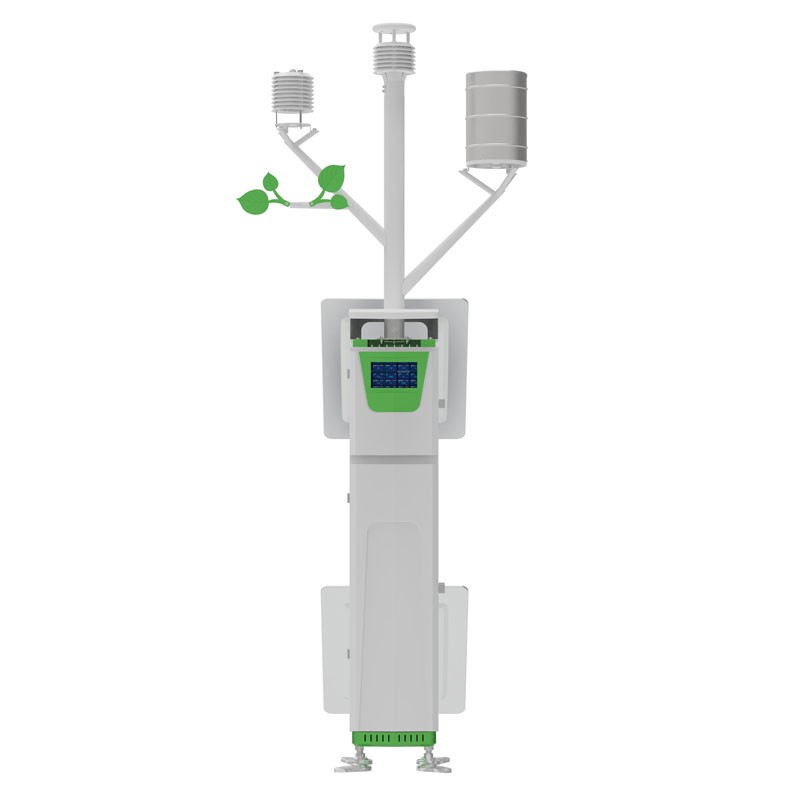
A Photovoltaic Weather Station is a high-precision environmental monitoring device designed for distributed photovoltaic systems. Equipped with various high-precision sensors, it collects real-time key data such as solar radiation, ambient temperature and humidity, wind speed and direction, and atmospheric pressure, providing accurate meteorological data for power station operation and maintenance.
It features three core functions. First, risk early warning: when the precipitation sensor detects that the hourly rainfall exceeds 30 millimeters, the system will prompt to check the drainage ditch; if the temperature sensor detects that the temperature on the back of the photovoltaic panel continues to rise, it can link with the fire sprinkler system to cool down; when the wind speed reaches more than 20 meters per second, it will prompt to check the bracket bolts to avoid risks in advance.
Second, data-based judgment: it can predict light intensity and monitor it in real time. When the light intensity exceeds 800W/㎡ for three consecutive days and the humidity exceeds 70%, the intelligent cleaning robot will be activated, which can increase the annual power generation by at least 5%; when the wind speed exceeds 25m/s, the tracking bracket will be automatically closed; when the module temperature exceeds 85℃, it will link with the inverter to reduce power. It can also warn of potential faults such as abnormal light exposure on photovoltaic panels.
Third, cost saving: the location of problems can be pinpointed through background data, saving 70% of on-site inspection time, and early warning of excessive salt spray concentration and other situations to reduce maintenance costs.
Attention should be paid to the installation location and parameter settings during use. The installation should be in an open and well-ventilated area within the power station, avoiding blocking by buildings or trees. The wind speed sensor is recommended to be installed in an open area 10 meters above the ground, and the light sensor should be free from blocking. Large-scale power stations should set up multiple monitoring points to ensure the representativeness of data. Parameter settings should be combined with the actual situation of the power station and local weather, and alarm thresholds should be reasonably set to avoid false alarms or missed alarms.
For specific selection, roof power stations should choose devices with a waterproof rating of IP65 or above and strong anti-electromagnetic interference; agricultural-photovoltaic complementary projects require monitors that can withstand extreme temperatures from -40℃ to 85℃ and are corrosion-resistant; coastal fishery-photovoltaic complementary projects must use salt spray-proof equipment. During installation, the height of the irradiance sensor should be close to the frame of the photovoltaic module, with a deviation of no more than 30cm, and the angle deviation should be controlled within 5°. Sensors require regular maintenance: manual calibration every quarter and professional factory calibration every year. Meanwhile, wind speed and precipitation sensors need lightning protection and grounding treatment, with the grounding resistance controlled within 4Ω.
This paper addresses:https://www.fengtuweather.com/industry/750.html
Related products
Related article
-
Why install a snow depth monitoring station?
2024-01-25 -
Introduction to the fog warning and monitoring system
2024-06-19 -
Portable Vehicle-Mount Weather Station: Precision Meteorological Monitoring for On-Road Safety
2025-07-24 -
Advantages of the box-type radar speedometer
2024-01-22 -
VOC monitor Technology and Applications
2025-11-19 -
Dust monitoring system for in-depth environmental protection
2024-02-20 -
One - Stop Dust Monitoring Solution
2025-01-16 -
Enhanced Mobility and Safety: The Role of Vehicle-Mount Weather Station
2024-12-25