

Product
-
Weather station
-
Road Weather Station
-
Photovoltaic Inspection
-
Atmospheric monitoring
-
Operating condition monitoring
Recommended article
- Electrical Power Analyzer enables multi-channel power grid parameter acquisition and the detection of harmonics and unbalance
- Shandong Fengtu, a manufacturer of meteorological stations, offers high-precision weather observation equipment designed for field use
- Series power supply for EL-Based Internal Defect Detection in Photovoltaic Modules
- Shandong Fengtu, a manufacturer of meteorological monitoring instruments, produces advanced weather observation equipment
- Odor gas detector On-site Monitoring of Odorous Pollutants in Compliance with the GB14554 Standard
- Integrated Four-Parameter Weather Station for Field Meteorological Data Collection (Temperature, Humidity, Wind Speed, and Wind Direction)
Contact us
Shandong Fengtu IOT Technology Co., Ltd
Sales Manager:Ms. Emily Wang
Cel,Whatsapp,Wechat:+86 15898932201
Email:info@fengtutec.com
Add:No. 155 Optoelectronic Industry Accelerator, Gaoxin District, Weifang, Shandong, China
Mechanical Weather Stations & Ultrasonic Weather Stations
Article source:Weather station time:2024-02-01 11:41:17 viewed:531times
The sky, like a sentimental dancer, sometimes shows a bright smile, cloudless, sunshine sprinkled all over the earth; sometimes gently cover the face, a few white clouds behind the sneer, but in a flash into dark clouds, thunder and lightning. It is as unpredictable as a baby's innocence and cunning, making it impossible to predict what kind of scenery will be in the next second.
When visiting the websites of large optical astronomical stations at home and abroad, we are able to see real-time environmental monitoring information. Environmental monitoring is a crucial task for optical astronomical observation, which ensures the acquisition of high-quality observation data.
In the early days of astronomical observation, observers could only rely on the naked eye to monitor the amount of clouds over the observatory. However, with the continuous development of detector technology and the advancement of electronic communication technology, today's astronomical observers can monitor changes in the sky in real time from the comfort of their indoor environment.
Meteorological information covers a wide range of elements such as temperature, relative humidity and wind speed and direction. To obtain these data, two types of equipment are used: traditional weather stations and ultrasonic weather stations. Traditional mechanical weather stations rely mainly on mechanical wind anemometers, but their measurement accuracy may be compromised under low wind speed conditions and may not work properly in harsh environments. In contrast, ultrasonic weather stations use ultrasound to measure wind direction and speed, which is not only compact but also provides more accurate data by overcoming the effects of wind speed and environmental factors.
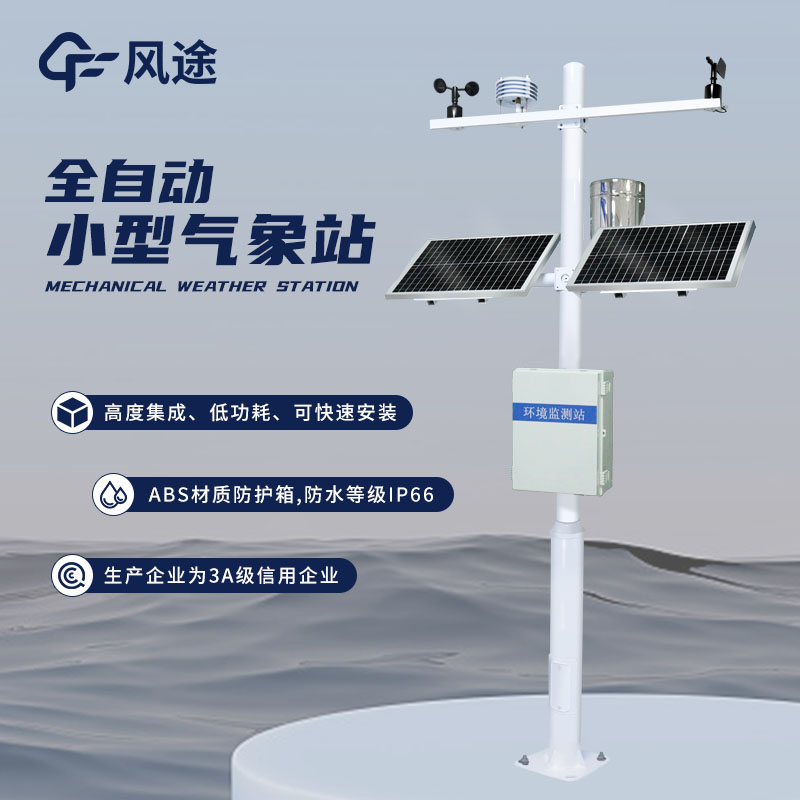
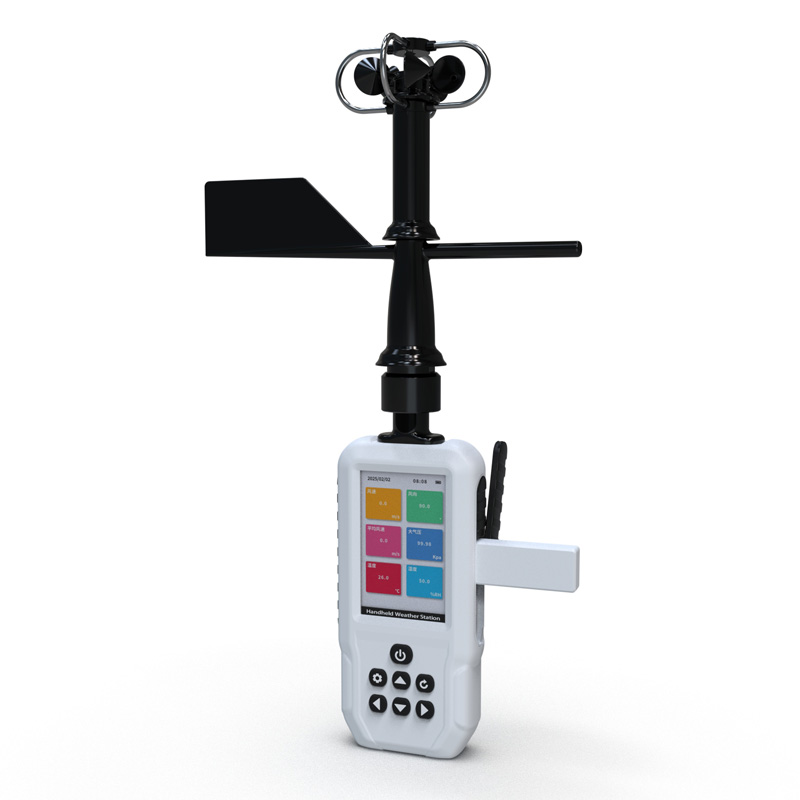
Mechanical weather stations, whose construction usually covers sensors, collectors and external equipment, realise the automatic observation, processing and transmission of meteorological elements. It can instantly monitor changes in meteorological data such as wind, temperature, humidity and barometric pressure, and has a digital display function, thus ensuring accurate monitoring of all meteorological data. The advantages of mechanical weather station lie in the features of simple structure, convenient assembly and easy maintenance, so it is highly favoured in the field of weather monitoring. However, it also has some disadvantages, so it is gradually replaced by ultrasonic weather station. The sky, like a sentimental dancer, sometimes shows a bright smile, cloudless, sunshine sprinkled all over the earth; sometimes gently cover the face, a few white clouds behind the sneer, but in a flash into dark clouds, thunder and lightning. It is as unpredictable as a baby's innocence and cunning, making it impossible to predict what kind of scenery will be in the next second.
When visiting the websites of large optical astronomical stations at home and abroad, we are able to see real-time environmental monitoring information. Environmental monitoring is a crucial task for optical astronomical observation, which ensures the acquisition of high-quality observation data.
In the early days of astronomical observation, observers could only rely on the naked eye to monitor the amount of clouds over the observatory. However, with the continuous development of detector technology and the advancement of electronic communication technology, today's astronomical observers can monitor changes in the sky in real time from the comfort of their indoor environment.
Meteorological information covers a wide range of elements such as temperature, relative humidity and wind speed and direction. To obtain these data, two types of equipment are used: traditional weather stations and ultrasonic weather stations. Traditional mechanical weather stations rely mainly on mechanical wind anemometers, but their measurement accuracy may be compromised under low wind speed conditions and may not work properly in harsh environments. In contrast, ultrasonic weather stations use ultrasound to measure wind direction and speed, which is not only compact but also provides more accurate data by overcoming the effects of wind speed and environmental factors.
Mechanical weather stations, whose construction usually covers sensors, collectors and external equipment, realise the automatic observation, processing and transmission of meteorological elements. It can instantly monitor changes in meteorological data such as wind, temperature, humidity and barometric pressure, and has a digital display function, thus ensuring accurate monitoring of all meteorological data. The advantages of mechanical weather station lie in the features of simple structure, convenient assembly and easy maintenance, so it is highly favoured in the field of weather monitoring. However, there are some disadvantages, so it is gradually replaced by ultrasonic weather station.
This paper addresses:https://www.fengtuweather.com/industry/89.html
Related products
Related article
-
Forestry Weather Station: The Guardian of Forests Against the Menace of Fires
2024-11-21 -
Dust Detector: Real-Time Data Transmission and 6 Core Functions for On-Site Environmental Control
2025-08-22 -
Introduction to Road Condition Detectors
2024-06-27 -
Handheld Radar SpeedGun Supports Both Manual and Automatic Sampling Modes
2026-04-30 -
Odor Monitoring System Employs Multi-Sensor Array Technology to Simulate Manual Olfactory Assessment
2026-07-13 -
Online dust particle counter in Clean Manufacturing Environments
2025-11-04 -
Harnessing Dust Detectors: Precision Tools for Pollution Prevention
2025-04-25 -
The Crucial Role of Online dust Monitoring system in Controlling Construction Dust Pollution
2024-11-18