

Product
-
Weather station
-
Road Weather Station
-
Photovoltaic Inspection
-
Atmospheric monitoring
-
Operating condition monitoring
Recommended article
- Electrical Power Analyzer enables multi-channel power grid parameter acquisition and the detection of harmonics and unbalance
- Shandong Fengtu, a manufacturer of meteorological stations, offers high-precision weather observation equipment designed for field use
- Series power supply for EL-Based Internal Defect Detection in Photovoltaic Modules
- Shandong Fengtu, a manufacturer of meteorological monitoring instruments, produces advanced weather observation equipment
- Odor gas detector On-site Monitoring of Odorous Pollutants in Compliance with the GB14554 Standard
- Integrated Four-Parameter Weather Station for Field Meteorological Data Collection (Temperature, Humidity, Wind Speed, and Wind Direction)
Contact us
Shandong Fengtu IOT Technology Co., Ltd
Sales Manager:Ms. Emily Wang
Cel,Whatsapp,Wechat:+86 15898932201
Email:info@fengtutec.com
Add:No. 155 Optoelectronic Industry Accelerator, Gaoxin District, Weifang, Shandong, China
How do you measure negative oxygen ion concentration? Real-time this portable instrument
Article source:Weather station time:2024-04-07 08:55:42 viewed:550times
Air is made up of a variety of molecules. Natural phenomena such as ultraviolet light and radiation cause some of the air molecules to release electrons, forming anions. Oxygen usually captures these electrons during the ionisation process, so these air anions are mostly called "negative oxygen ions".
Negative oxygen ions, also called "air vitamins", are formed when oxygen molecules capture free electrons. They purify the air of small dust particles, especially small particles. The more negative oxygen ions there are, the cleaner the air is and the better it is for our health.
Negative oxygen ions can react with harmful organic substances in the air and decompose them, effectively removing polluting gases such as formaldehyde and also eliminating odours.
Dust and germs in the air are easily adsorbed down under the action of negative oxygen ions, helping to clean the air.
The World Health Organisation recommends that the concentration of negative oxygen ions in fresh air should be maintained at more than 1,000 to 1,500 per cubic centimetre. Research shows that the level of negative oxygen ions in the air is directly related to our health. If there are less than 800 negative oxygen ions, it may lead to health problems such as physiological dysfunction, air-conditioning disease, headaches, insomnia and respiratory illnesses.
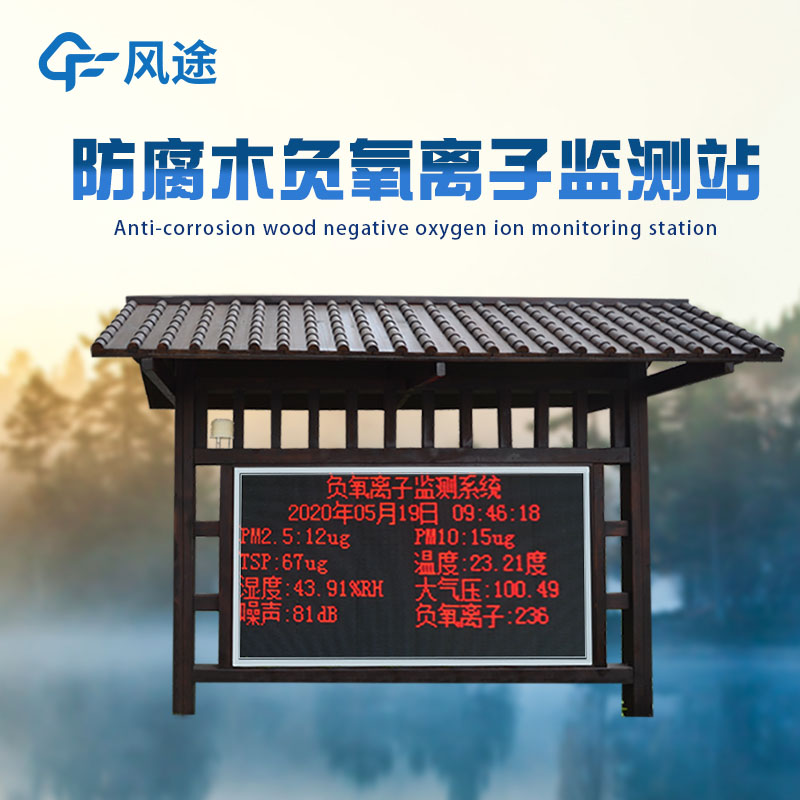
To determine whether a park is suitable for morning exercise, you can check the air quality data by installing an anion detector. Many attractions have also installed such detectors to attract tourists. The amount of negative oxygen ions is a key indicator for determining whether the air quality and environment are beneficial to health.
We use the Negative Oxygen Ion Tester to check indoor and outdoor air quality as well as the negative oxygen ions released by the oxygen concentrator.
FT-FY1 is a portable negative oxygen ion analyser that is easy to use and provides clear readings. It utilises a special capture mechanism and algorithm to accurately measure negative ions in the air, with strong resistance to interference and the ability to capture negative ions of small particle size. This monitoring system is also capable of long standby times, making it suitable for mobile testing use.
This paper addresses:https://www.fengtuweather.com/industry/305.html
Related products
Related article
-
Road Weather Stations: Enhancing Highway Safety Through Advanced Meteorological Monitoring
2025-10-16 -
Vehicle-Mount Weather Station by Fengtu: Integrated Monitoring for Drone Meteorological Safety
2025-07-02 -
Fengtu Technology Dust Monitoring Equipment: Comprehensive Solutions for Air Quality Management
2025-10-17 -
How to choose a dust and noise monitor?
2024-07-16 -
Unleashing the Power of Forestry Weather Stations for Fire Safety
2025-01-07 -
Solar Powered Weather Station Enabling Unattended Field Monitoring via MPPT Technology
2026-04-17 -
Data-Driven Stewardship: The FT-CQX9 Grassland ecological monitoring station for Grassland Protection and Sustainable Livestock Farming
2025-11-13 -
Vehicle-Mount Weather Station: A Mobile Solution for Wind Data Acquisition
2024-12-03