

Product
-
Weather station
-
Road Weather Station
-
Photovoltaic Inspection
-
Atmospheric monitoring
-
Operating condition monitoring
Recommended article
- Shandong Fengtu, a renowned manufacturer of environmental monitoring instruments, supplies a wide range of field and online monitoring equipment
- Weather Monitoring Equipment enables high-precision, automated environmental parameter monitoring in field settings
- Introduction to the Principles, Applications, and Technical Specifications of Speed enforcement system
- Forest Weather Station Facilitates Precise Monitoring and Scientific Prevention of Forest Fires
- Radar speed gun Leverages the Doppler Effect for Precise Speed Measurement Across Multiple Scenarios
- Ultrasonic Snow Depth Monitoring Station Enables High-Precision, Automated Snow Depth Measurement
Contact us
Shandong Fengtu IOT Technology Co., Ltd
Sales Manager:Ms. Emily Wang
Cel,Whatsapp,Wechat:+86 15898932201
Email:info@fengtutec.com
Add:No. 155 Optoelectronic Industry Accelerator, Gaoxin District, Weifang, Shandong, China
Multifunctional weather station Enables Automatic Meteorological Data Acquisition and Transmission
Article source:Weather station time:2026-06-23 09:56:51 viewed:115times
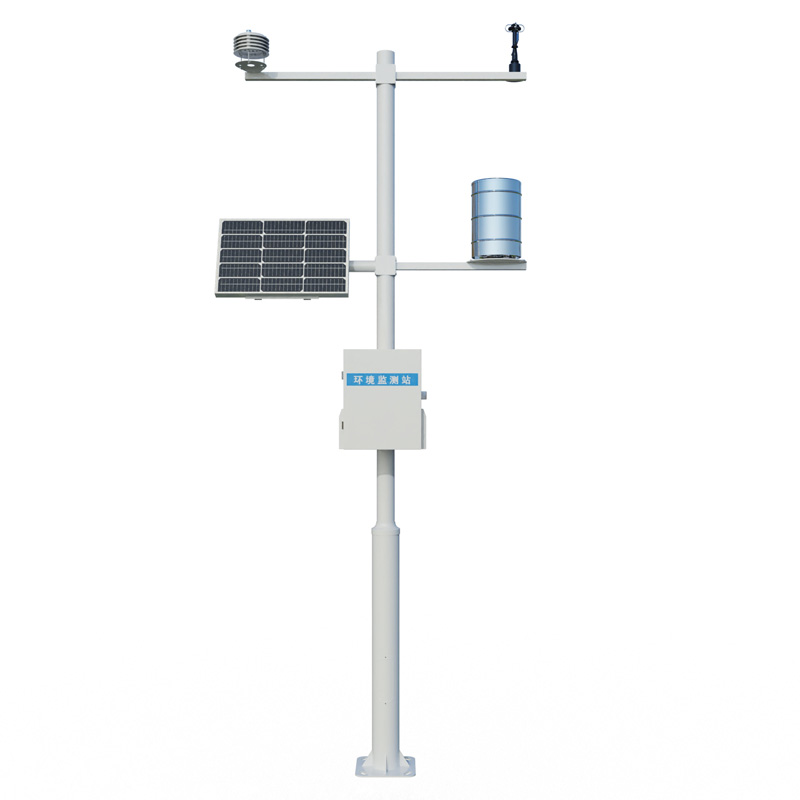
Multifunctional weather station consists of five parts: meteorological sensors, a data logger, a solar power system, a pole support, and a cloud platform. It can be quickly deployed in field environments to achieve automatic acquisition, storage, transmission, and analysis of meteorological elements, and is widely used in meteorology, agriculture, forestry, environmental protection, airports, and ports.
Multifunctional weather station is an intelligent observation device that uses sensor and data processing technology to automatically acquire, store, transmit, and analyze meteorological elements. The system comprises five parts: meteorological sensors, a data logger, a solar power system, a pole support, and a cloud platform. The device features a highly integrated design, low power consumption, and can be quickly installed and put into operation in field environments. The system automatically generates messages without manual intervention and transmits detection data to the central station at regular intervals. When meteorological element values change, the output power of the sensing elements of each sensor changes accordingly. The data logger collects these changes and, after linearization and quantification processing, derives the values of each meteorological element. The observation items mainly include air pressure, temperature, humidity, wind direction, wind speed, and rainfall. With expansion, it can also measure other elements. Data acquisition frequency is high, collecting and storing one set of observation data per minute.
The development history of automatic weather stations can be traced back to the 1980s. On March 14, 1985, the first imported Japanese automatic weather station in China was officially opened to the public after installation and commissioning at Beijing Capital International Airport. In 1995, the Civil Aviation Administration of China (CAAC) imported five sets of automatic weather stations from Germany, which were installed in Tianjin, Dalian, Hangzhou, Xiamen, and Urumqi. By 2007, 61 civil airports nationwide had installed automatic weather stations. By the end of the 11th Five-Year Plan period, 32,300 automatic weather stations had been built nationwide, and all 2,418 national-level ground stations had achieved automation of basic meteorological element observations.
In terms of power supply, Multifunctional weather station generally adopts a combination of solar power and battery storage, with some sites even supporting dual-mode power supply from both solar and mains power. This ensures stable equipment operation and continuous data acquisition even in complex and harsh natural environments. Relying on local data storage and remote real-time transmission technology, combined with intelligent automated control and alarm functions, the equipment can capture instantaneous fluctuations in local microclimates, providing first-hand data for forecasting and early warning.
Multifunctional weather station is widely used in meteorological monitoring, agriculture and forestry, environmental protection and marine industries, airports and ports, scientific research, and educational institutions. By filling gaps in meteorological observation data across spatial areas, the system provides fundamental data support for meteorological services across various industries.
This paper addresses:https://www.fengtuweather.com/technical/960.html
Related products
Related article
-
The role of weather stations in the forage industry
2024-02-28 -
The Prominent Role of Fengtu's Road Weather Station in Transportation
2024-11-19 -
The Significance and Application of Meteorological Observation Stations in Local Weather Monitoring
2025-05-08 -
Fire Risk Factor Integrated Monitoring Station Instructions
2024-07-03 -
How do you measure negative oxygen ion concentration? Real-time this portable instrument
2024-04-07 -
Monitor de polvo Breaks Through the Limitations of Traditional Fixed Monitoring Points
2025-11-17 -
Road Weather Station: Precision Monitoring, Intelligent Modeling, and Timely Warnings for Highway Safety
2025-02-26 -
Sensor Array Technology and Application Scenarios of Odor gas detector
2026-06-29