

Product
-
Weather station
-
Road Weather Station
-
Photovoltaic Inspection
-
Atmospheric monitoring
-
Operating condition monitoring
Recommended article
- Environmental detector monitors the concentration of negative oxygen ions in the air around the clock
- Practical Applications of Climate Monitoring Instruments in Agriculture, Forestry, and Field Research
- Application Characteristics of PV Module I-V Power Testers in On-Site Power Plant Inspections
- Application of Compact Meteorological Monitoring Equipment in Dairy Barn Environments
- How Environmental Monitors Achieve Integrated Monitoring of Twelve Parameters
- How Small-Scale Weather Stations Enable Unattended Field Monitoring
Contact us
Shandong Fengtu IOT Technology Co., Ltd
Sales Manager:Ms. Emily Wang
Cel,Whatsapp,Wechat:+86 15898932201
Email:info@fengtutec.com
Add:No. 155 Optoelectronic Industry Accelerator, Gaoxin District, Weifang, Shandong, China
Series power supply Enabling Precise Detection of Internal Defects in PV Modules via Reverse-Bias Electroluminescence
Article source:Weather station time:2026-04-16 10:53:25 viewed:297times
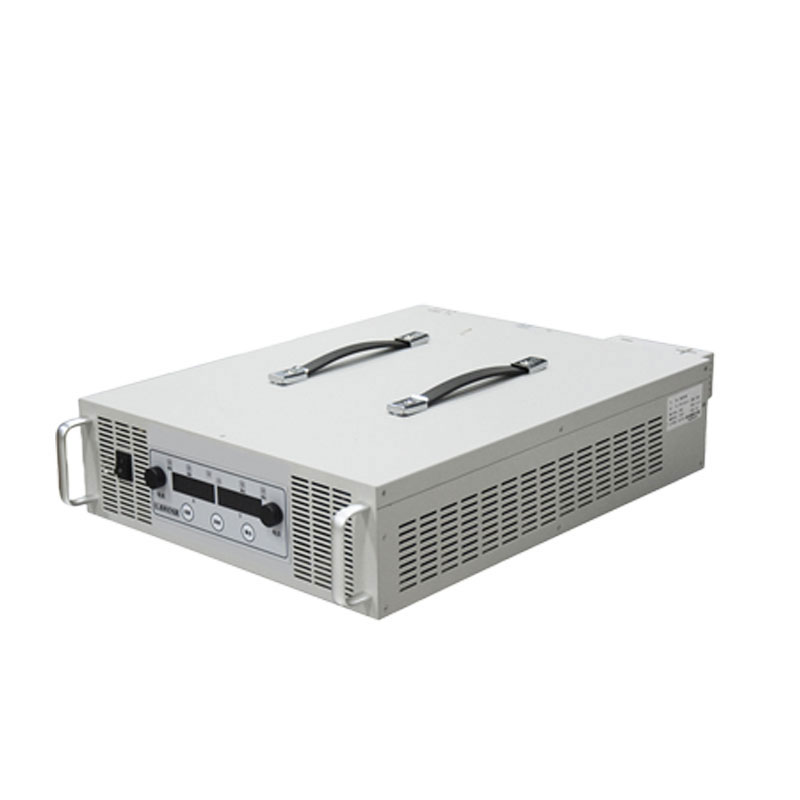
Series power supply is a device developed specifically to leverage the reverse-bias characteristics of PV power plant strings. By converting AC power into a DC input fed into solar panels, it stimulates electroluminescence (EL), thereby enabling the precise detection of internal defects within the modules—a capability that enhances power generation efficiency and reduces operation and maintenance costs.
Series power supply is a programmable DC power supply unit engineered specifically for the reverse-bias testing of PV power plant strings. Its core function involves converting AC power into a DC input supplied to the solar panels, thereby stimulating the PV modules to generate an Electroluminescence (EL) effect, which facilitates the precise detection of internal defects within the modules. During the EL inspection process, Series power supply applies a specific DC voltage and current—typically around 1.5 times the module's operating current—to the PV string. This stimulates the semiconductor materials within the modules to emit near-infrared light with wavelengths ranging from 800 to 1100 nanometers. By utilizing high-sensitivity infrared cameras to capture variations in light intensity distribution, and subsequently processing this data through image algorithms into visual grayscale images, the system enables the rapid identification and localization of defects. Defective areas—such as micro-cracks, broken grid lines, poor solder joints, and "dark cells"—exhibit distinct dark-state characteristics due to anomalous carrier recombination, making them clearly visible for analysis.
The technological core of Series power supply lies in its programmable power supply architecture and multi-layered protection mechanisms. Taking common models such as the FT-150050 as an example, the device offers an output voltage range of 0 to 1500V, a current range of 0 to 10A, and a maximum power output of 16kW, thereby meeting the power supply requirements for EL inspections ranging from a single module to an entire module string (typically comprising 20 to 30 modules connected in series). The device features a built-in reverse-current protection module with a configurable impedance threshold to prevent current backflow within the PV string. Its short-circuit protection function automatically cuts off power in the event of reverse polarity connection in the PV string, preventing damage to the module's bypass diodes. Furthermore, its programmable buffering protection employs a buffered power-on/off design to prevent sudden, high-current surges that could otherwise damage the PV panels. Select models are also equipped with integrated 4G/Wi-Fi communication systems and an IoT-enabled mobile application, allowing for remote parameter configuration and operational control. In practical applications, Series power supply has been widely utilized in comprehensive inspection projects and routine operations and maintenance (O&M) testing for photovoltaic power plants. Data indicates that conducting periodic EL testing can boost a power plant's electricity generation output by 2% to 5% and extend the service life of its PV modules. During the power plant construction acceptance phase, Series power supply—when paired with an EL tester—enables the rapid screening for micro-crack damage sustained during transportation and installation. During the O&M phase, regular inspections facilitate the timely detection of potential faults—such as hot spots and PID effects—thereby guiding strategies for module cleaning and replacement, ensuring the safe operation of the system, and reducing O&M costs.
This paper addresses:https://www.fengtuweather.com/industry/923.html
Related products
Related article
-
FT - CZ5: Empowering Your Trips with Accurate In - Transit Weather Data
2025-04-11 -
What can be done about forest fire prevention? Try this weather station
2024-04-24 -
Strategies for Using Dust Detectors to Avoid Penalties under Stringent Environmental Regulations
2025-06-10 -
Odor Monitoring System is suitable for various complex malodorous gas detection environments
2025-11-27 -
Handheld Radar SpeedGun Calculating the Speed of Moving Objects Based on the Doppler Effect
2026-04-28 -
Power Quality Monitoring Equipment multi-channel measurement instrument meets the monitoring needs of power systems
2026-05-22 -
PV Module Power Tester Enables Precise Testing of 1500V High-Voltage Modules
2026-03-18 -
Weather Monitoring Equipment enables high-precision, automated environmental parameter monitoring in field settings
2026-09-30