

Product
-
Weather station
-
Road Weather Station
-
Photovoltaic Inspection
-
Atmospheric monitoring
-
Operating condition monitoring
Recommended article
- Electrical Power Analyzer enables multi-channel power grid parameter acquisition and the detection of harmonics and unbalance
- Shandong Fengtu, a manufacturer of meteorological stations, offers high-precision weather observation equipment designed for field use
- Series power supply for EL-Based Internal Defect Detection in Photovoltaic Modules
- Shandong Fengtu, a manufacturer of meteorological monitoring instruments, produces advanced weather observation equipment
- Odor gas detector On-site Monitoring of Odorous Pollutants in Compliance with the GB14554 Standard
- Integrated Four-Parameter Weather Station for Field Meteorological Data Collection (Temperature, Humidity, Wind Speed, and Wind Direction)
Contact us
Shandong Fengtu IOT Technology Co., Ltd
Sales Manager:Ms. Emily Wang
Cel,Whatsapp,Wechat:+86 15898932201
Email:info@fengtutec.com
Add:No. 155 Optoelectronic Industry Accelerator, Gaoxin District, Weifang, Shandong, China
Multiparameter Weather Sensor: A Versatile Tool for Small-Scale Climatic Monitoring
Article source:Weather station time:2025-08-11 09:12:25 viewed:484times
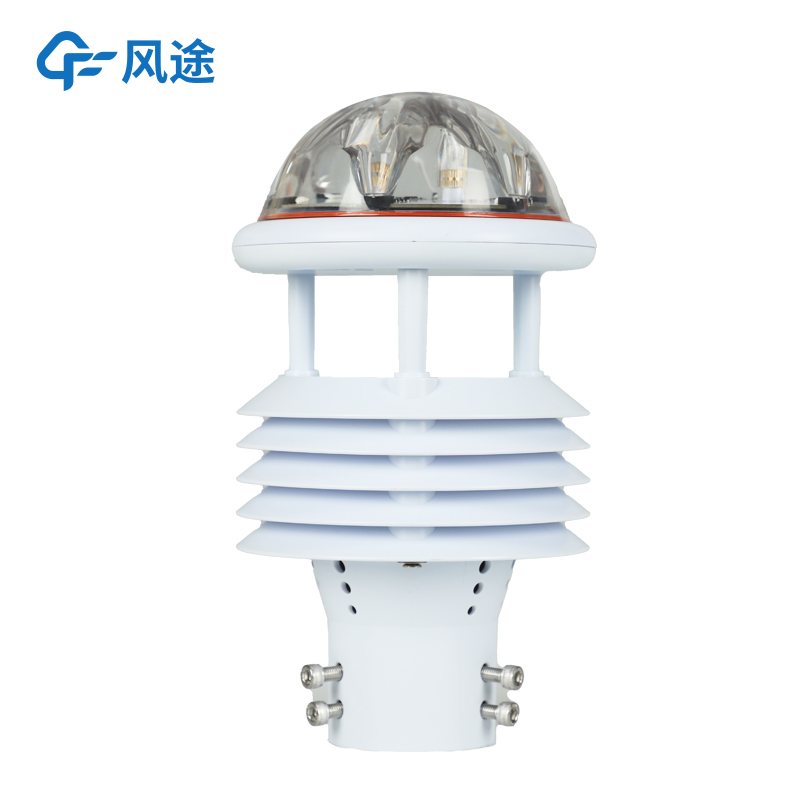
There is a small-sized Multiparameter Weather Sensor, which is a flexible, economical and practical online monitoring tool. It is mainly used to detect small-scale climatic characteristics of the near-surface atmosphere and upper soil formed due to the structural features of the underlying surface. It can observe various meteorological elements such as temperature, humidity, wind force, rainfall, and solar radiation, and can play a role in various ecosystems such as farmland, grassland, and forest, providing basic meteorological data for scientific research, production activities, and daily life.
A set of equipment is equipped with multiple sensor interfaces, capable of observing more than 20 parameters, and there are over 30 types of sensors available for selection, with a variety of configuration and combination methods. The installation process is not complicated, and it can be connected to a cloud platform to realize quasi-real-time data acquisition and remote management of the equipment, making it suitable for joint observation of multiple stations to form an observation network.
Its application range is wide, covering meteorological environment monitoring in agriculture and forestry, greenhouse meteorological monitoring, air temperature and humidity monitoring, soil moisture monitoring, precipitation monitoring, wind speed profile monitoring, and meteorological measurement in field scientific expeditions, etc.
The core data collector of the equipment supports remote data download. In addition to the functions of data collection and recording, and local connection for data acquisition, it also has a remote data transmission function, which can transmit data to the cloud server through the mobile operator's network or Wi-Fi network. Users can log in to their accounts via the Internet to remotely view data charts, download monitoring data, and set up sensors. Meanwhile, there is a cloud service platform available in the domestic region.
In terms of system composition, the data collector is a device adapted to the Internet of Things era, which greatly simplifies the links of device connection, configuration, maintenance, and data acquisition. The collector has a solar-powered function, a large storage capacity, and its shell is waterproof and radiation-proof, enabling it to adapt to applications in field environments. It can easily connect and automatically identify various sensors, and provide real-time data anytime and anywhere through the cloud platform. Sensors can be independently selected according to different monitoring needs, with a wide variety, including soil moisture sensors, water potential sensors, rainfall sensors, temperature sensors, soil infiltration meters, solar radiation sensors, leaf humidity sensors, wind direction and speed sensors, air temperature and humidity sensors, etc. These sensors are powered by the data collector, and the acquired data is stored in the collector. After connecting to the cloud service, remote data acquisition and remote setting of sensors can be realized, and the interface connection of sensors is very convenient. The cloud data platform, used in conjunction with the data collector, can realize remote management of instruments and equipment, online data acquisition and rapid analysis, facilitating the display and sharing of data results. Through Internet connection, users can log in to the platform using computers, mobile phones and other mobile devices to obtain near-real-time field observation data. They can compare and view data graphs without importing data, customize charts to display data trends, show the geographical distribution of equipment according to GPS information, store data in the cloud, facilitate data sharing and communication within the team, and implement account hierarchical management, among other functions.
This paper addresses:https://www.fengtuweather.com/industry/768.html
Related products

Related article
-
Miniature weather station Integrated Meteorological and Air Quality Monitoring System is suitable for field deployment
2026-02-02 -
Meteorological station Solar-Powered and Modularly Designed for Long-Term Field Monitoring
2026-04-21 -
Complete solution for small-scale weather stations Provides Customized Miniature Weather Station Hardware and Software System Services
2025-12-11 -
Power Quality Measurement How to Detect Power Grid Waveform Distortion and Harmonic Content?
2026-05-27 -
Meteorological Station Siting Must Satisfy Three Fundamental Requirements Representativeness, Accuracy, and Comparability
2026-04-13 -
The price of small weather stations varies depending on their model and configuration
2026-08-06 -
Online Dust Monitoring System: Intelligent Dust Suppression via Real-time PM Monitoring & Spraying Linkage
2025-06-24 -
Handheld Radar SpeedGun Supports Both Manual and Automatic Sampling Modes
2026-04-30